
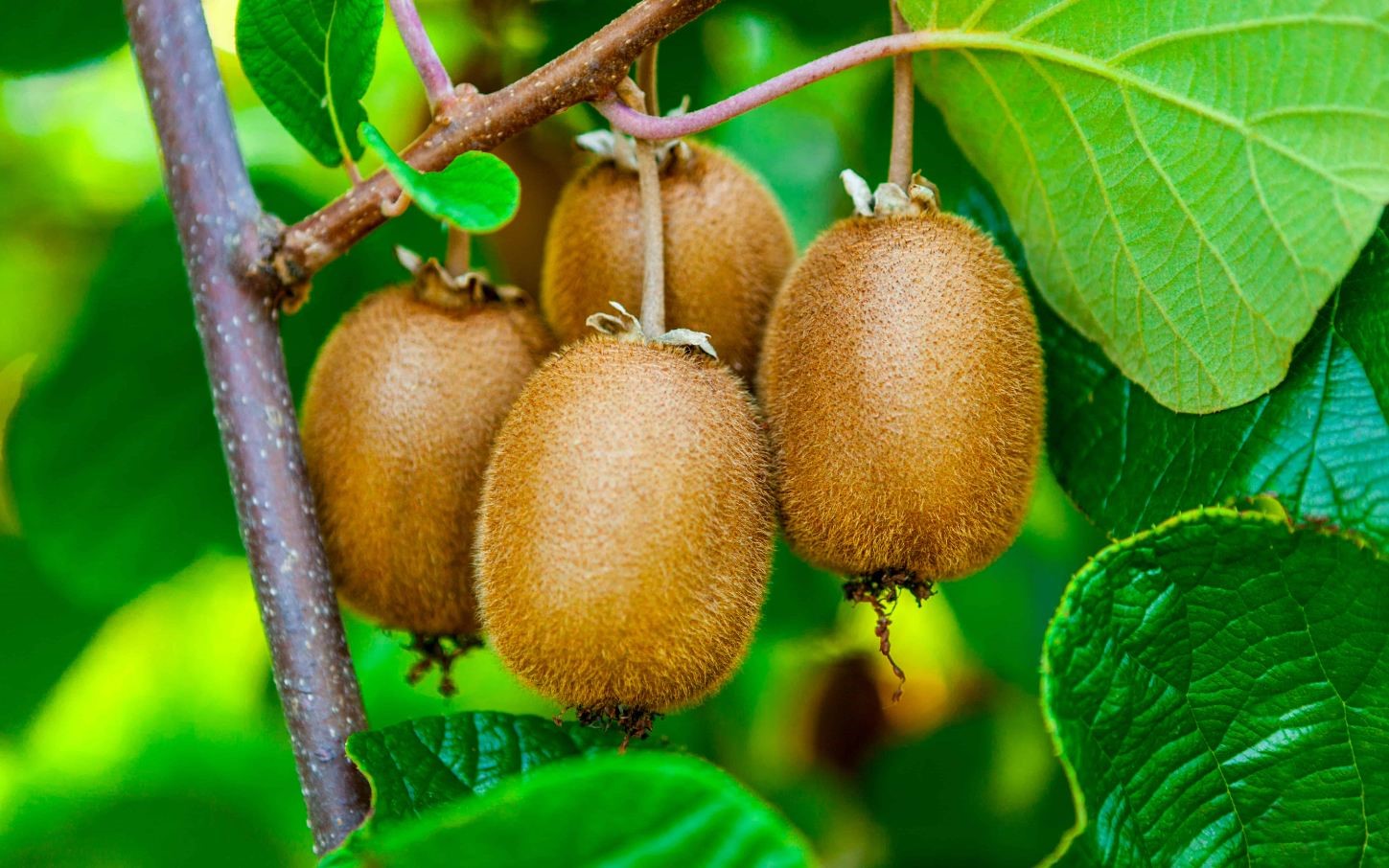
European kiwi fruit
Kiwi – small fruit, big nutrition
Nutrition
Kiwi is naturally refreshing, with about 84% water and only 58 kcal per 100 g. It is high in vitamin C, which contributes to the normal function of the immune system, and high in vitamin K, which contributes to the maintenance of normal bones and normal blood clotting1,2
Seasonality
In Europe, kiwis are harvested mainly in autumn (October–November) and are available throughout winter. The EU’s leading producers are Italy and Greece, which are among the world’s top exporters3.
Usage
Quick and versatile: cut and eat with a spoon, slice into fruit salads, or blend into smoothies. Their refreshing flavour makes them a favourite in breakfast bowls.


Kiwis were originally known as “Chinese gooseberries” before being renamed “kiwi” in New Zealand in the 20th century, inspired by the kiwi bird4.
Historical fun fact
Today, kiwifruit is one of the most traded fruits worldwide. Italy and Greece are among the largest producers in the EU, making Europe a global reference point for kiwi exports5.
Cultural fun fact
Sources:
1. USDA FoodData Central – Kiwifruit, raw
2. EFSA EU Register of Nutrition and Health Claims
3. Eurostat Fruit Production Data 2022; FAO Crop Statistics
4. Encyclopedia Britannica – Kiwifruit, 2021
5. FAO Crop Statistics; Eurostat Trade Data 2022